The sounds of Ghazal and Gambus, the flavours of Nasi Ambeng and Sambal Goreng Jawa, and the creativity of local artists and artisans took centre stage as Jelajah Pentas Seni Johor 2026 (PSJ26) arrived at Dataran Astaka Shahbandar on 30th and 31st October 2026.
For residents, the two-day programme offered more than performances to watch. Families discovered local traditions together, children expressed their creativity, aspiring musicians explored the Gambus, and visitors enjoyed heritage food while supporting the people who keep these traditions alive.
Organised by Yayasan Johor Corporation (Yayasan JCorp), Batu Pahat marks the third stop of the five-district tour, carrying forward the celebration of Bugis heritage in Pontian and the collaboration with local partners in Segamat. Each stop brought a different part of Johor’s cultural story into focus, connecting community pride with opportunities for participation, talent development and local enterprise.
Yayasan JCorp Chief Executive Officer, Dato’ Mizan bin Yahya said the ambition for Batu Pahat was to make the value of arts and heritage tangible to the community.
“People who visited Pentas Seni Johor were able to find something that spoke to them—a familiar dish, a favourite melody, a tradition they remember, or something their children are discovering for the first time.
“That is what we want success in Batu Pahat to look like: families enjoying their own heritage, local talent gaining recognition, businesses making new connections, and young people wanting to take part and not just watch,” he said.
The journey began in Pontian with Festival Rumpun Bugis Johor, bringing together traditional performances, cultural showcases, workshops, culinary demonstrations and creative marketplaces. In Segamat, PSJ26 formed part of the wider Festival Kota Selatan programme, while Yayasan JCorp’s collaboration with Majlis Perbandaran Segamat included activating Lorong Seni Budaya Segamat.
“In Pontian, the focus was on celebrating Bugis heritage. In Segamat, it was about connecting culture, community and local spaces. Batu Pahat shared its own distinctive voice through Ghazal, Gambus, Zapin and its culinary traditions.
“The identity changes from district to district, but our purpose remains the same: to bring heritage closer to people and create opportunities for the communities who sustain it,” he added.
At PSJ26 Batu Pahat, visitors were also able to explore Paso Kreatif that featured handicrafts and creative products, while Yok Mangan brought together local food and beverage entrepreneurs, offering a variety of local delicacies.
The W.A.R.O Project – Warisan Asli, Rasa Original, added a culinary heritage dimension, alongside traditional Javanese cooking demonstrations featuring Sambal Goreng Jawa and Nasi Ambeng. Together, these experiences put the spotlight not only on what Batu Pahat enjoys eating, but also on the knowledge and tradition behind its food.
For those drawn to music and hands-on activities, the programme featured the Gambus Cultural Clinic, the Suara Irama Ghazal Competition and the Gambus Motif Colouring Competition.
Performances include Zapin Koris, Zapin Tanjung Labuh, Zapin Duo Batu Pahat, Gambus, Shariah-compliant Kuda Kepang and Acrobatic Dragon Dance, bringing different expressions of local cultural life into one shared celebration.
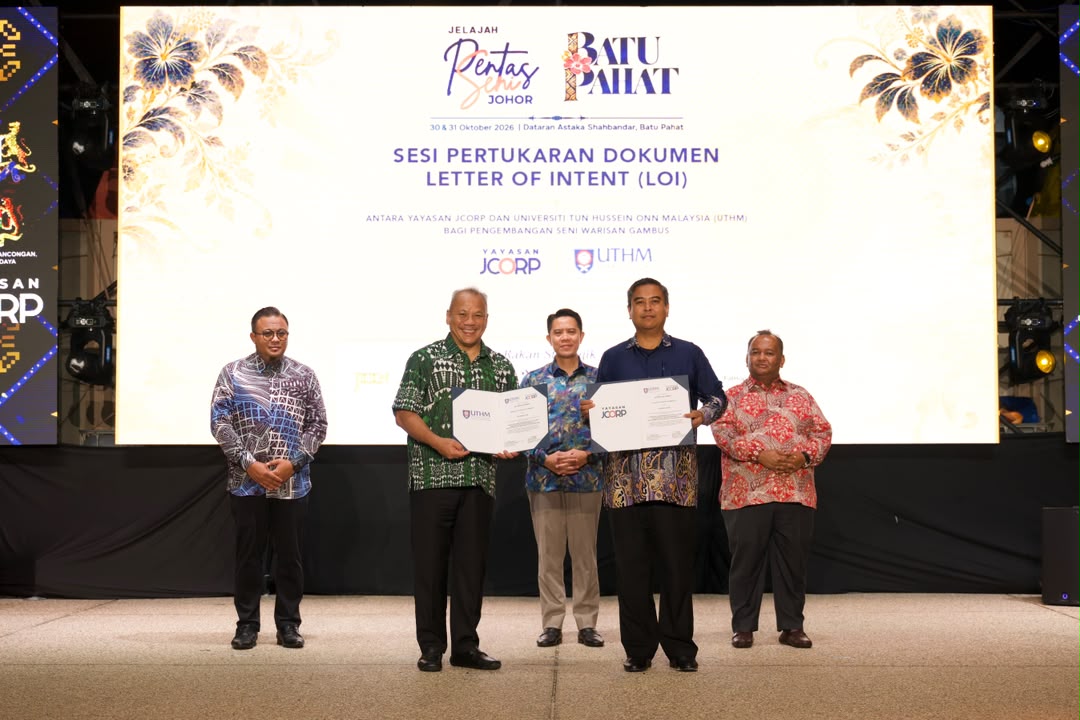
A key development in the Batu Pahat edition is the collaboration between Yayasan JCorp and Universiti Tun Hussein Onn Malaysia (UTHM) to support the continuity of Ghazal and Gambus through training, workshops, historical documentation and the sharing of performance techniques.
The collaboration is intended to connect the celebration on stage with longer-term work: developing talent, recording musical knowledge and helping these traditions remain accessible to future generations.
“We do not want the connection with Ghazal and Gambus to end when the stage lights go out. Our aspiration is for more young people to learn, more practitioners to share their knowledge, and more of this heritage to be documented and passed on.
“The festival creates the interest. Partnerships such as this can help turn that interest into continued participation,” said Dato’ Mizan.
A Letter of Intent was exchanged between Yayasan JCorp and Universiti Tun Hussein Onn Malaysia (UTHM), represented by Dato’ Mizan bin Yahya and Dr Zahrul Akmal bin Damin, Dean of the Centre for General Studies and Co-curricular, UTHM, respectively.
PSJ26 Batu Pahat was officiated by Haji Mohd Nazid bin Jasiman, Yang Dipertua Majlis Perbandaran Batu Pahat.
By bringing together performances, food, creative products and learning experiences, Yayasan JCorp strengthened Batu Pahat’s appeal as a cultural destination while opening more avenues for its communities to participate in the creative economy, in support of Visit Johor 2026 and Visit Malaysia 2026.
As the “Membela” arm of Johor Corporation (JCorp), Yayasan JCorp continues to translate the Group’s commitment towards advancing environmental and social sustainability through the implementation of various high-impact initiatives, while expanding opportunities and benefits for communities in Johor and across Malaysia.
Following Batu Pahat, Jelajah PSJ26 will continue to Kota Tinggi on 28th and 29th November before concluding in Johor Bahru on 25th and 27th December 2026.