Johor Plantations Group Berhad (JPG) announced its results for the third quarter; ended on 30th September 2026 (3QFY2026), recording profit after tax (PAT) of RM100.3 million, nearly double the RM51.3 million recorded in the preceding quarter. The 95.6% quarter-on-quarter (QoQ) increase was driven by higher internal fresh fruit bunch (FFB) production following a seasonal recovery, which further improved the profit margins, supported by favourable crude palm oil (CPO) average selling prices.
Operationally, internal FFB production rose by 35.6% QoQ to 292,352 metric tonnes (MT), while total FFB processed increased by 18.4% to 411,943 MT. The stronger crop output contributed to higher CPO and palm kernel (PK) delivery volumes, which increased by 6.2% and 15.7%, respectively.
Despite the encouraging quarterly recovery, cumulative crop production remained below the previous year’s level. For the nine months which ended on 30th September 2026 (9MFY2026), internal FFB production stood at 712,829 MT, representing an 11.8% decline from 808,622 MT in the corresponding period last year.
For 9MFY2026, JPG recorded revenue of RM1.22 billion, compared with RM1.23 billion in 9MFY2025, while PAT stood at RM201.9 million. In line with the Group’s performance, the Board declared a third interim dividend of 1.50 sen per share for FY2026, reaffirming JPG’s commitment to delivering sustainable returns to shareholders.
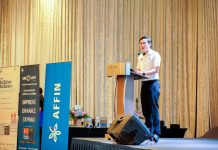
“We remain firmly committed to the disciplined execution of our accelerated replanting programme from 2026 to 2028, with a focus on improving long-term plantation productivity through superior planting materials and greater operational efficiency. Alongside this, we are advancing mechanisation and adopting digital solutions across our estates and mills to enhance workforce productivity, improve product quality and traceability, and further strengthen our cost management efforts. These initiatives will strengthen our upstream fundamentals and support sustainable long-term value creation,” said Mohd Faris Adli
Shukery, Managing Director of JPG.
“Looking ahead, we maintain a positive production outlook, supported by ongoing improvements in yields and operational efficiency. Nevertheless, we remain mindful of potential disruptions arising from adverse weather conditions, particularly with the onset of the monsoon season in November 2026. We will continue to enhance operational resilience to sustain performance over the longer term,” he added.
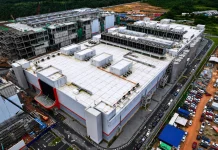
Meanwhile, the Group’s flagship Integrated Sustainable Palm Oil Complex (iSPOC) continues to progress through its commissioning phase. Under Phase 1, the specialty oils and fats refinery, kernel crushing plant and biomass power plant are scheduled for commissioning by December 2026, while other facilities are expected to commence commercial operations progressively in the first half of 2027. As the refinery becomes fully operational, iSPOC will mark a significant milestone in JPG’s transformation into a fully integrated company, expanding its presence across the upstream and downstream value
chain.
Moving forward, JPG remains focused on strengthening its integrated business model across upstream, midstream, downstream and bioenergy segments. The Group aims to enhance upstream productivity, improve midstream processing capabilities and strengthen its supply network, expand into higher-value downstream products, and pursue further growth opportunities in bioenergy. Guided by its Greenutrition and Greenergy moonshots, these priorities are aimed at capturing greater value across the supply chain, enhancing business resilience and delivering sustainable long-term value to shareholders.