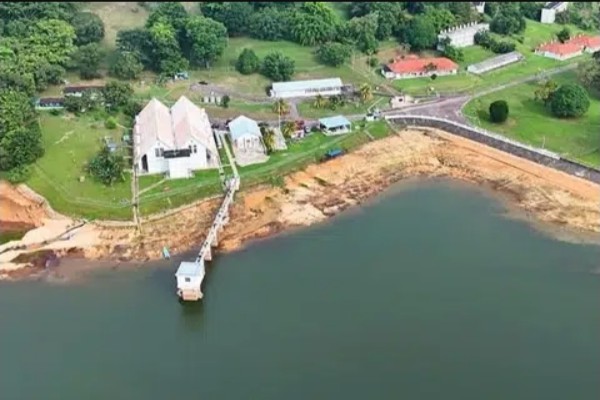
In addition to identifying 13 out of 47 water treatment plants in the state that could be impacted if rainfall drops between mid-January and mid-March 2027, Johor monitored six dams where water levels were at critical levels.
Johor Bahru, Kota Tinggi, Kulai, Kluang, and Segamat are the five districts that received attention for having catchment areas that feed water to the residents, according to Mohamad Fazli Mohamad Salleh, chairman of the Johor Public Works, Transport, Infrastructure, and Communications Committee.
“The six dams that are monitored daily are Upper Layang, Lower Layang, Lebam, Machap, Pontian Kechil and Gunung Pulai 2,” he stated during a live broadcast on the Northeast Monsoon and El Nino phenomenon on 11th November via Fazli’s Facebook page.
According to Fazli, Johor would have significant rainfall in December 2026 and January 2027 as a result of the Northeast Monsoon. When the monsoon rains stop while El Nino’s impacts continue, there may be a greater chance of drought.
“Every week, the state administration will keep an eye on the weather. The National Disaster Management Agency (Nadma) and the Malaysian Meteorological Department may collaborate on cloud seeding activities; however, the execution is contingent upon cloud conditions.
“This is because during the monsoon season, the risk of flooding in low-lying areas must also be taken into account,” he stated.
He also said that steps have been taken by Ranhill SAJ and the Johor Water Regulatory Agency (Bakaj) to ensure that the risky water plants have access to more raw water.
For instance, when the water level in Sungai Ulu Benut drops, water can be released from Machap Dam into the river to ensure an adequate supply to the Simpang Renggam Water Treatment Plant.
“Water can also be pumped directly from the dam into the river. Private ponds have been identified as a last-resort water source should the dam’s supply become insufficient,” he explained.
If these measures prove inadequate, Ranhill SAJ may implement a scheduled water supply rotation across different areas.
In the event of a further deterioration in the situation, the emergency response plan also includes the deployment of 283 static water tanks at accessible locations for residents, supported by 38 water tankers to replenish supplies.
Fazli emphasised the importance of water conservation, noting that reducing daily consumption would help extend the availability of existing water reserves.
He also encouraged residents to collect rainwater for activities such as watering plants, thereby reducing their reliance on treated water.
According to him, if 100,000 households each save 200 litres of water daily, the total demand for dam water could be reduced by 20 million litres per day.