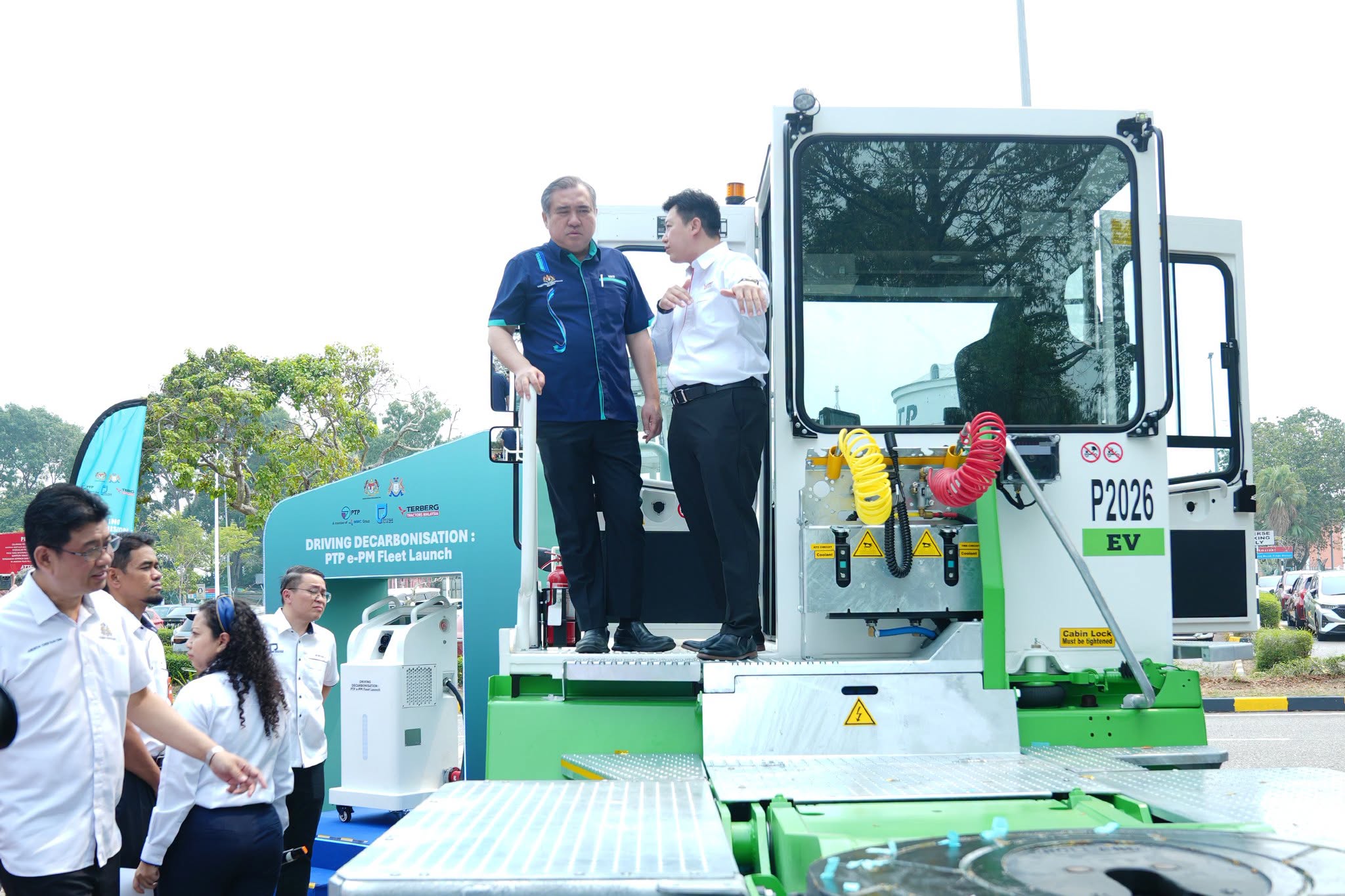
Port of Tanjung Pelepas (PTP), a joint venture between Malaysia’s MMC Group and the Netherlands’ APM Terminals, has achieved another significant milestone in its carbon footprint reduction agenda by launching a fleet of 52 electric-powered terminal trucks. This fleet consists of e-PMs, also known as electric terminal prime movers.
The launch follows PTP’s announcement last month that it had become the first port in Malaysia to commission and operate electric-powered terminal trucks.
Acquired from Terberg Tractors Malaysia (TTM) under a purchase agreement signed in 2025, this fleet of 52 units is expected to bolster PTP’s sustainability goals, enhance operational efficiency, and drive greener port operations.
The momentous event, officiated by Malaysia’s Minister of Transport, Loke Siew Fook, reflects years of meticulous planning, close collaboration among stakeholders, and continuous investment in green port operations. This initiative demonstrates how national port infrastructure can empower businesses to achieve sustainability goals while significantly reducing carbon emissions.
In his speech, Loke commended the efforts of PTP and TTM in realising this historic milestone. “PTP has grown at an extraordinary rate. It is the first container terminal in Malaysia to handle over 14 million TEUs of containers in a single year and is recognized as the fastest-growing port in the world. However, growth that results in a larger carbon footprint is not the kind of progress that Malaysia or the world would value in the long run.
“As a member of the IMO Council since 2005, Malaysia remains fully committed to the IMO’s goal of achieving net-zero greenhouse gas emissions from international shipping by or around 2050. This goal cannot be achieved through ships alone. While ships burn fuel at sea, ports also determine the cleanliness of energy use within yard and berth areas, as well as the speed at which docked vessels can access new fuels.
“This is why the digitalisation and electrification of terminal trucks are recognised as crucial. By gradually replacing diesel-powered terminal trucks with electric units, PTP is currently reducing carbon emissions at one of the busiest hubs on global cargo routes.
“This achievement is all the more significant because the electric terminal trucks were built locally in Pasir Gudang, Johor, by TTM’s workforce, which consists entirely of Malaysians. This clearly demonstrates the strength of the nation’s engineering and manufacturing capabilities. The Ministry of Transport fully supports the proactive leadership shown by PTP and TTM in ensuring both companies remain aligned with global maritime decarbonisation efforts.”
Echoing Loke’s sentiments, the General Manager of the Johor Port Authority (LPJ), Dr Siti Noraishah Azizan, said, “On behalf of LPJ, we extend our heartiest congratulations to PTP on this remarkable achievement. LPJ will continue to champion the growth and decarbonisation initiatives of this port to ensure its continued success in creating meaningful opportunities, driving economic prosperity, and delivering long-term benefits to the people, the state of Johor, and future generations.”
PTP Chief Executive Officer Mark Hardiman said, “After a quarter-century of operations, today’s launch reinforces our core philosophy that business growth and environmental conservation must go hand in hand.
“Green technology is not an afterthought; for us, it is a prerequisite for future growth. The launch of this fleet, for instance, is part of our structured decarbonisation strategy to reduce carbon emissions by 45% by 2030 against a 2021 baseline, achieve carbon neutrality by 2040, and reach net-zero emissions by 2050.”
“Having successfully replaced all diesel-powered rubber-tyred gantry (RTG) cranes in the container yard, PTP plans to participate in the Corporate Renewable Energy Supply Scheme (CRESS) while preparing for long-term Scope 3 emission reductions across the broader value chain between 2041 and 2050. Furthermore, through collaborations with the Malaysian Palm Oil Board (MPOB) and PETRONAS, we have upgraded the biodiesel blend used for all diesel-powered terminal trucks from B7 to B20 this year.”
“Our active participation in international frameworks, including the IMO GreenVoyage2050 initiative and the Memorandum of Understanding (MoU) with the Port of Melbourne, signed during the 47th ASEAN Summit in Kuala Lumpur, ensures that PTP remains aligned with the global development of low-emission maritime corridors,” he added.
TTM Chief Executive Officer Boo Wei Ching also expressed pride in this achievement.
“TTM is pleased to hand over the entire fleet of 52 electric-powered terminal trucks to PTP. This achievement demonstrates the capability of Malaysia’s manufacturing industry to support world-class port operations.
“Beyond delivering the machinery, our team worked closely with PTP throughout the testing and operational preparation phases to ensure optimal reliability for the terminal trucks within the challenging terminal environment. We deeply appreciate PTP’s continued trust and confidence in our joint effort to drive sustainable mobility.”