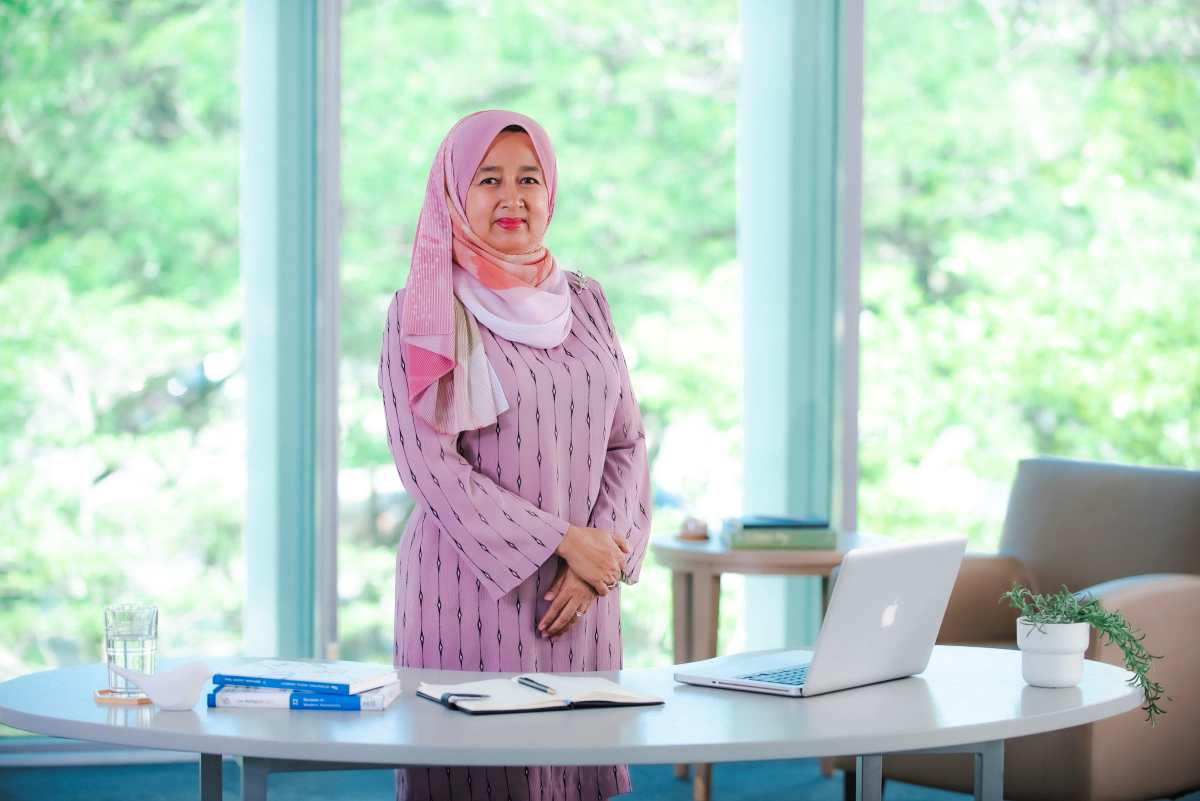
Prof Dr Nazimah Idris grew up in a house full of noise, books, responsibility and love. As the eldest of eight children, raised by two schoolteachers, leadership wasn’t a title she stepped into later in life, it was something she learned early, through caring for siblings, sharing space, and understanding that discipline and kindness can coexist. Childhood holidays meant everyone was home together, and learning never stopped. There were always stories to read, games to play, and lessons learned, both spoken and unspoken about showing up for others.
That early training stayed with her.
Her professional heart lies in maternal health, particularly high-risk pregnancies. A fellowship in maternal-fetal medicine in Australia deepened her expertise, but her focus has always remained grounded in real lives and real outcomes. Malaysia, she notes, has made remarkable progress in maternal health: 98% of women receive adequate antenatal care, 98% deliver safely with skilled healthcare professionals, and 95% receive postnatal care. With a maternal mortality rate of 25 per 100,000 live births [1], Malaysia is ahead of many countries globally — an achievement often admired by her international peers.
Yet, for her, progress never ends. The next frontier is ensuring women enter pregnancy in the best possible state of health. This means strengthening women’s health literacy and continuously building the capabilities of the healthcare workforce. “We should be proud,” she says, “but we should also always be striving to do better.”
Her professional heart lies in maternal health, particularly high-risk pregnancies. A fellowship in maternal-fetal medicine in Australia deepened her expertise, but her focus has always remained grounded in real lives and real outcomes. Malaysia, she notes, has made remarkable progress in maternal health, with strong antenatal, delivery and postnatal care coverage. It’s something to be proud of and something to build on. For her, the next frontier is ensuring women enter pregnancy as healthy as possible, through better health literacy and stronger healthcare systems. Progress, she believes, is never static.
Beyond her titles and there are many, she describes herself more simply: decisive, resilient, capable, and generous in service. Giving back is not an add-on to her life; it is woven into it. From projects supporting vulnerable children to leadership roles at national and international levels, her career milestones are impressive. Yet the one that holds the deepest meaning is receiving the Royal College of Obstetricians & Gynaecologists (UK) Honorary Fellowship — recognition for her work with vulnerable women in Malaysia and beyond. It’s an honour held by very few Malaysians, and one she carries with quiet pride.
The values that guide her leadership are the same ones she grew up with. From her father: hard work and discipline. From her mother: kindness, no matter who stands in front of you. Together, they form a leadership philosophy that balances firmness with empathy, whether in the clinic, the classroom or the boardroom.
Her commitment to diversity, equity and inclusion is deeply personal. For her, DEI isn’t about policies on paper; it’s about lived experience. It shows up in who gets heard, who is trusted, and who is given the opportunity to succeed. In healthcare and education especially, inclusion shapes outcomes. She is a strong advocate for community-based care, having worked with refugees, displaced populations, and underserved communities, often in unconventional settings. These experiences, she says, were humbling reminders of what healthcare can and should be.
On this International Women’s Day, her message to young women is clear and steady: believe you are capable, prepare yourself well, and build strong support systems. Leadership, she reminds us, is not accidental it is planned, practiced and sustained by community.
If she could change one thing for the next generation of women, it would be mindset. Women must recognise their strengths, resist being boxed in by outdated narratives, and learn to use every available resource to contribute meaningfully to society while lifting one another up along the way.
What gives her hope? The numbers tell a powerful story: high female youth literacy, strong participation in higher education, and growing representation across sectors. Barriers are falling, and while gaps remain, the future looks promising.
Her final message this International Women’s Day is simple, and profound:
Being a woman is special. Use that position not just for yourself, but to help other women, and to make society better for everyone.
—————————————————————
[1] National Health and Morbidity Surveys 2022 and Department of Statistics Malaysia