
Breast cancer remains the most common cancer affecting women in Malaysia, accounting for 30% of female cancers and claiming nine lives daily — a reality that carries significant social and economic burden, making the disease a national concern.[1]
For many patients, the challenge extends beyond initial treatment, with one in six early breast cancer patients (Stage II & III) with HR+/HER2- subtype facing a risk of recurrence within three years.1
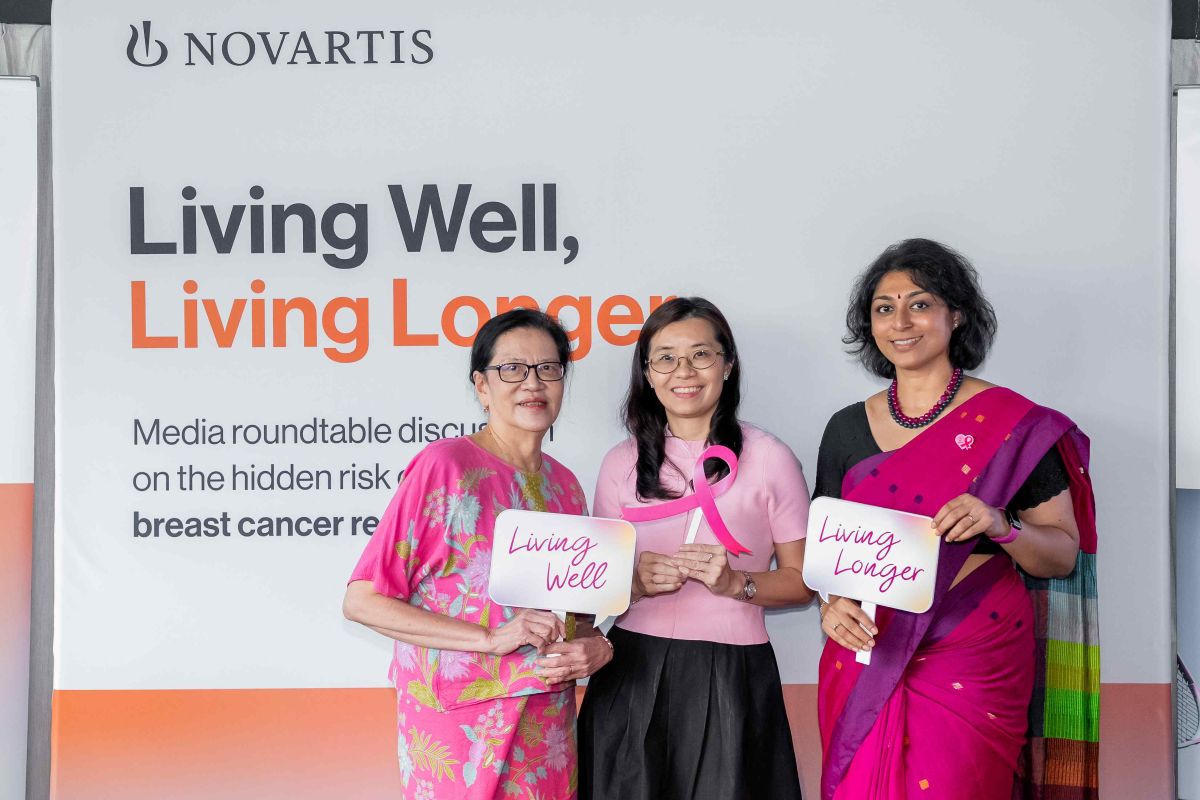
At the recent ‘Living Well, Living Longer: The Hidden Risk of Breast Cancer Recurrence’ roundtable discussion, Novartis Malaysia shared findings from a perception survey commissioned through IQVIA, showing that two in three breast cancer patients (69%) are concerned or extremely concerned about the risk of recurrence, with 41% thinking about it often.2
Despite this high level of concern, 45% said they rarely think about recurrence, as it is not regularly discussed during doctor visits, with patients often perceived to be at “low risk”. Furthermore, 78% of patients felt that public awareness of early breast cancer recurrence was inadequate, with just over half (53%) feeling informed about the factors that contribute to recurrence.2
This underscores the urgent need for more proactive and regular conversations about recurrence risk between patients and healthcare providers, ensuring every patient understands their individual risk and can navigate their care with confidence.
“The reality is that even after a successful initial treatment, tumor cells may remain undetected. A tumor as small as one cubic millimeter can contain up to 100,000 cells, and it only takes a single cancer cell for the disease to return.[2] While recurrence risk differs from one person to another, normalizing these conversations allows clinicians to better support patients in understanding their individual risk and long‑term care needs,” said Professor Emeritus Dato’ Dr Yip Cheng Har, Consultant Breast Surgeon.
Additionally, the survey found that 57% of patients fully understood the importance of adjuvant therapies such as hormone therapy, chemotherapy, and targeted therapy in reducing the risk of recurrence among early breast cancer patients, with advice from family and physicians being the main driver of compliance. A patient’s perception of their quality of life was also found to influence their approach to ongoing treatment, highlighting an important consideration in care.2
According to Dr Kua Voon Fong, Consultant Clinical Oncologist, “What our patients consistently tell us is that they want more time — time with their families, and time to live without constant worry about recurrence. Encouragingly, advances in post‑treatment care are helping to address this. Today, some treatment options can continue to work beyond primary therapy and help extend recurrence‑free survival for patients with high‑risk early breast cancer. However, these benefits are closely linked to treatment adherence. When patients are supported to maintain a good quality of life, they are more likely to continue recommended adjuvant therapy, leading to improved outcomes.”
Building on insights from the perception survey and with physicians identified as patients’ most trusted source of information, panelists encouraged early breast cancer patients to initiate conversations about recurrence risk by asking their healthcare providers three key questions:
- Am I at risk of recurrence?
- How can I reduce my risk?
- Which tests do I need and how often should I take them?
“‘Will my cancer come back?’ is one of the questions many people living with breast cancer carry with them throughout their journey. Therefore, when doctors discuss the risk of recurrence, it is important that patients feel supported in understanding what that means for them personally, including the steps they can take to help reduce that risk. As patients navigate long-term treatment and survivorship, compassionate communication and ongoing follow-up play a vital role. As a patient advocacy group, we are committed to walking alongside patients and their families by providing education, emotional support, peer connections, and practical resources throughout the cancer journey. Support from loved ones, survivor communities, and trusted tools such as the ICanCare app can help patients access reliable information, reflect on concerns, and feel connected and reassured between clinic visits,” said Sumitra Selvaraj, General Manager, Breast Cancer Welfare Association Malaysia (BCWA).
Sanjeev Balachandran, Country President, Novartis Malaysia, Brunei and Asia Emerging Markets (AEM), said, “The perception survey highlights why progress for early breast cancer patients cannot happen in silos. Helping Malaysians live well and live longer means bringing together healthcare professionals, patient advocacy groups, and partners across the system to strengthen awareness and enable more informed decision-making around recurrence risk. At Novartis, extending and improving lives is about playing our part in building these partnerships and helping ensure patients are supported beyond initial treatment.”
To learn more about early breast cancer and the risk of recurrence, patients can access educational resources via the ICanCare app, available on Google Play and the Apple App Store.
————————————————————————–


 face risk of recurrence within 3 years, yet low-risk assumptions deter conversations)