As of 26th July 2026, fresh milk production in the Jemaluang Dairy Valley project had reached three million litres, Bernama reported. According to JDV Sdn Bhd (JDV), it was nearly in line with the original goal of 3.6 million litres set for this year.
It said milk production is expected to increase further to 5.5 million litres by the end of 2026.
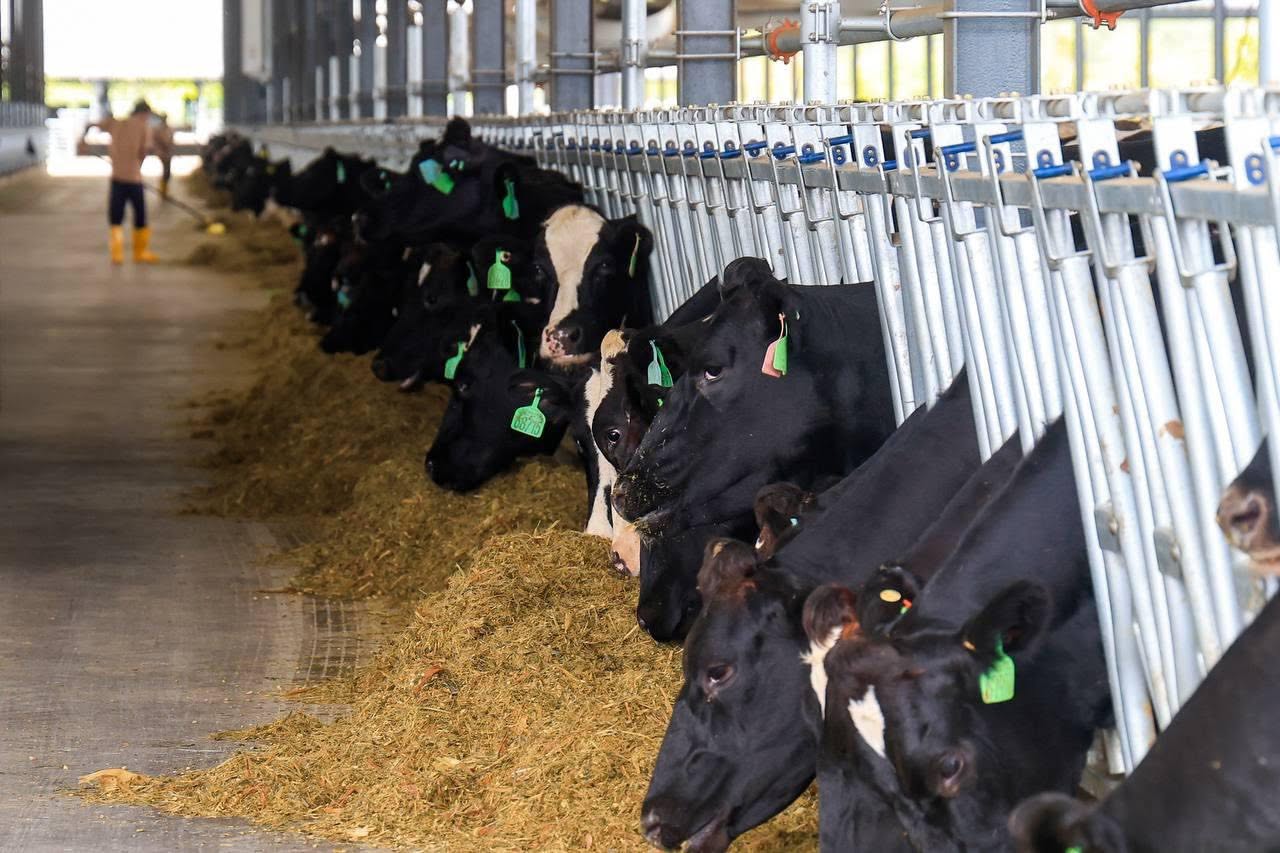
There are currently 1,900 dairy cows in the dairy valley, according to its Chief Executive Officer, Qasem Alhasan. As the cows enter the lactation phase, the number of milking cows increases steadily, increasing milk production.
“In the long term, we aim to produce 12 million litres of fresh milk when the farm reaches full capacity. Additionally, the construction of a milk processing plant is progressing on schedule and is expected to be completed by the end of this year,” he told Bernama.
Before other milk-based products are introduced to the market in 2027, Qasem stated that the company is concentrating on making sure product quality, branding, and distribution networks are at their peak in addition to the processing plant.
“Our target (for the milk products) include families, children, and young professional consumers who prioritise health and prefer high-quality fresh milk, as well as supplying products to cafes, restaurants, hotels, and food manufacturers.
“Our main goal is to make premium fresh Malaysian milk more accessible to consumers while reducing the country’s reliance on imported dairy products,” he added.
According to Qasem, the entire investment for the development of the dairy valley is anticipated to surpass RM200 million, encompassing farm infrastructure, the acquisition of dairy cows, cutting-edge breeding technology, the milk processing plant, utility facilities, and auxiliary facilities, all of which demonstrate the long-term dedication to bolstering the country’s dairy industry.
A capital investment of RM25 million for infrastructure development, primarily using materials sourced from suppliers in Mersing and adjacent districts, he claimed, would also have a positive effect on the local community’s economy.
“In addition, we have created more than 60 jobs for the community and benefited various stakeholders, including contractors, suppliers, logistics and transport companies, traders, and veterinary services,” he said.
In his discussion of the difficulties, Qasem noted that the dairy industry is a capital-intensive sector that necessitates long-term investments. Other difficulties include the need to manage large-scale farming operations, the rising cost of livestock feed, the need to draw in skilled local labour, and the growing demand from consumers for fresh milk.
In order to create a sustainable dairy industry, he continued, “we remain committed to investing in technology, automation, and strategic partnerships.”
Qasem stated that JDV intends to increase the herd size to 4,000 dairy cows by 2027, strengthen the downstream business, introduce a variety of dairy products, and explore opportunities to export products to international markets.
Over the next three to five years, JDV intends to become a leading dairy integration company, contributing to the nation’s food security agenda while also developing a dairy industry that benefits the community and future generations.
“We don’t just want to build a successful dairy farm; we want to establish an internationally competitive dairy industry that Malaysians can be proud of,” he said.
The Jemaluang Dairy Valley project is a collaboration between the Johor state government, the ECER Development Council (ECERDC), and JDV Sdn Bhd, with an estimated investment of RM80 million.