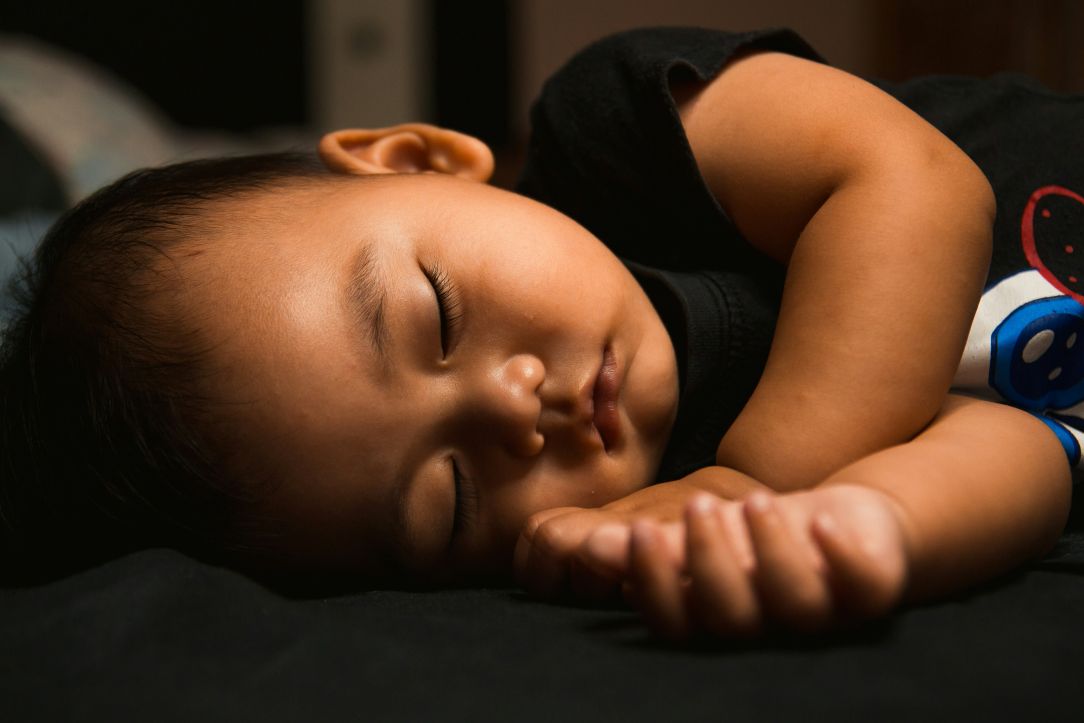
It is bedtime. You tuck your child into bed, pull the blanket over them and give them a goodnight kiss. As you turn off the light, you notice that their mouth is slightly open. You hear a little snoring, but they seem comfortable, so you leave them to sleep.
The next morning, their lips are dry. Perhaps they seem tired despite having spent enough hours in bed. You assume they have a blocked nose or that sleeping with their mouth open is simply a habit.
Then you notice it again. And again.
Children get colds, develop allergies and have the occasional restless night. But when mouth breathing becomes a regular pattern, particularly alongside snoring or disturbed sleep, it is worth looking into.
As a dentist, I sometimes meet parents concerned about their child’s crowded teeth or bite without realising that persistent mouth breathing may also deserve attention.
The important question is not simply whether a child sleeps with their mouth open, but why they are breathing through it in the first place.
When should parents seek advice?
One of the simplest things parents can observe is whether their child regularly keeps their mouth open while resting or sleeping. This can be an early sign worth paying attention to, particularly when it becomes a persistent pattern.
If a child’s nose is blocked during a cold, breathing through the mouth is a normal response. Allergies can cause ongoing nasal congestion, while enlarged adenoids or tonsils may restrict airflow. Other nasal or airway conditions can also make nasal breathing difficult.
Telling a child to keep their mouth closed will not solve the problem if they cannot breathe comfortably through their nose.
Look for other signs, including frequent snoring, restless sleep, gasping, apparent pauses in breathing or unusual tiredness during the day. These symptoms do not confirm obstructive sleep apnoea (OSA), but they may warrant further assessment.¹˒² Severe breathing difficulty requires emergency medical attention.
Before visiting a doctor, consider noting how often mouth breathing occurs, whether your child snores, whether nasal congestion persists and whether their sleep or daytime behaviour has changed. These observations can help guide further assessment.
Depending on the symptoms and examination findings, your child’s doctor may recommend referral to an ear, nose and throat (ENT) specialist.
Can mouth breathing affect facial development?
During childhood, the teeth, jaws and face are still developing. Research has found associations between persistent mouth breathing and differences in jaw relationships and dental alignment. However, these findings do not prove that mouth breathing alone causes these changes. Facial development is influenced by several factors, including genetics, anatomy and a child’s underlying airway condition.³
Crowded teeth do not necessarily indicate a breathing problem, and straight teeth do not rule one out. Dental alignment alone cannot tell us whether a child is breathing comfortably through their nose.
Persistent mouth breathing should therefore not automatically lead to orthodontic treatment. The priority is to understand the child’s symptoms and determine whether an underlying problem needs attention.
Sometimes, the next step is a referral
In one case, a child presented with persistent nasal or sinus-related symptoms alongside concerns about mouth breathing. Enlarged adenoids were suspected as a possible contributor, but this had not been confirmed.
Rather than proceeding directly with dental or orthodontic treatment, I recommended an ENT assessment to investigate whether an airway problem might be contributing to the symptoms.
A dentist can assess the teeth, bite and oral development, while an ENT specialist can investigate nasal obstruction and other upper airway concerns. Depending on the findings, both may need to be involved in the child’s care.
Not every child who breathes through their mouth needs an ENT referral. The appropriate next step depends on the symptoms and clinical assessment.
Does every child need treatment?
No. Early assessment does not automatically mean treatment must begin; sometimes, monitoring is sufficient.
If a breathing problem is identified, management depends on its cause. Orthodontic appliances may be considered for selected children with a particular jaw or dental characteristics and sleep-disordered breathing, as part of an appropriate care plan.⁴ They are not a universal treatment for mouth breathing.
Myofunctional therapy may also be considered for selected children with mild-to-moderate OSA, either as a treatment option or an adjunct. However, the evidence supporting its use is limited, and it should not replace appropriate assessment or treatment of an underlying airway obstruction.¹˒⁴
An open mouth during an occasional cold is usually not a reason for alarm. But if your child regularly sleeps with their mouth open, snores frequently or seems to struggle to breathe through their nose, discuss these observations with a healthcare professional.
The goal is not to correct a habit at all costs. It is to understand why it is happening and help children receive the right care when they need it.

About the author
Dr Caren Lwi Yee Chin is a dentist based in Johor Bahru, Malaysia. She holds a Doctor of Dental Surgery degree from Universiti Kebangsaan Malaysia and Membership of the Faculty of Dental Surgery of the Royal College of Surgeons of Edinburgh (MFDS RCSEd). Her professional interests include children’s oral development and early orthodontic assessment.
This article is for general educational purposes and does not replace individual medical or dental advice.
——————————————————————————————
References
- Ng DK, Huang YS, Teoh OH, et al. The Asian Paediatric Pulmonology Society (APPS) Position Statement on Childhood Obstructive Sleep Apnea Syndrome. Pediatric Respirology and Critical Care Medicine. 2017;1(2):26–38.
- Kaditis AG, Alonso Alvarez ML, Boudewyns A, et al. Obstructive sleep disordered breathing in 2- to 18-year-old children: diagnosis and management. European Respiratory Journal. 2016;47(1):69–94.
- Zhao Z, Zheng L, Huang X, Li C, Liu J, Hu Y. Effects of mouth breathing on facial skeletal development in children: a systematic review and meta-analysis. BMC Oral Health. 2021;21:108.
- Leow LC, Lee CP, Venkateswaran S, et al. Singapore consensus statements on the management of obstructive sleep apnoea. Annals of the Academy of Medicine, Singapore. 2025;54(10):627–643.