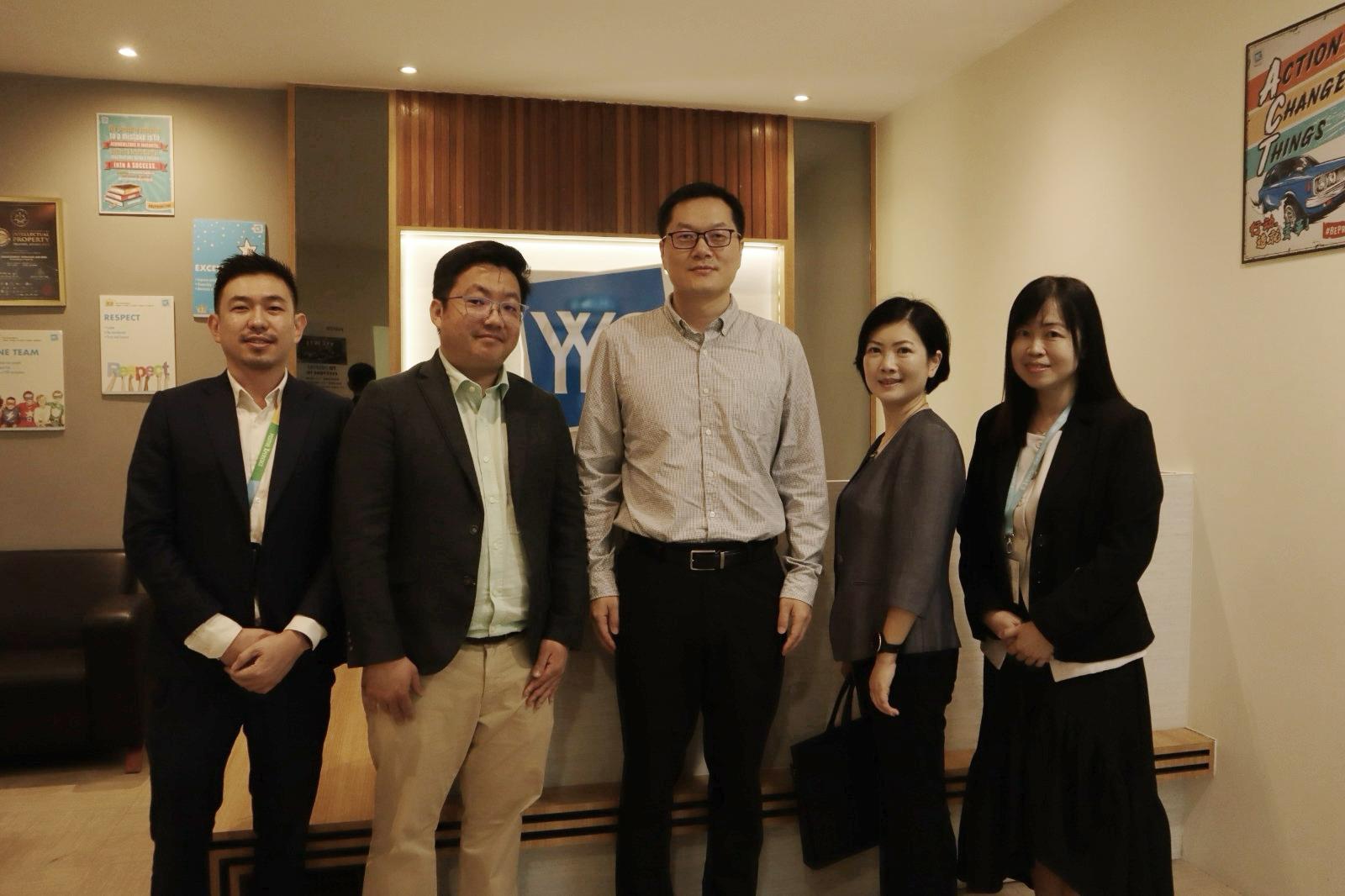
On 22 May 2025, YYC Johor had the honour of hosting delegates from the Embassy of the People’s Republic of China in Singapore, including Kang Yiming (Counsellor) and Xu Fangyuan (Second Secretary). During the visit, several key issues were discussed, with a focus on global economic developments and the emerging opportunities within the Johor-Singapore Special Economic Zone (JS-SEZ).
Global Tariff Landscape and JS-SEZ Positioning
One of the most pressing global topics discussed was the continuation of the United States’ 10% minimum global tariff. This tariff, which remains in force despite international scrutiny, affects even close partners like Singapore, which is currently trading at a deficit with the U.S. Notably, countries with heavier export volumes to the U.S. face similar, if not stricter, tariff treatments.
In this context, Malaysia, and specifically the JS-SEZ, is likely to face a tariff rate that sits between those imposed on Singapore and China. This positioning presents JS-SEZ as a resilient and competitive option for multinational corporations looking to realign their global supply chains in response to geopolitical and trade policy uncertainties.
Strong Investment Momentum Since JS-SEZ Agreement
Following the formal signing of the JS-SEZ agreement in January 2025, Johor has recorded total investments of RM27.4 billion, with an estimated 90% attributed to the JS-SEZ. Notable developments include:
- Gold Peak Technology Group Limited: The first announced investment post-agreement, amounting to RM670 million, focused on supplying downstream components for data centres.
- Paris Baguette: Investing RM260 million to establish a central kitchen in Nusajaya Techpark, with halal certification targeting the Middle East market.
- Biocon: An existing investor, the Indian biotech firm committed an additional RM1.1 billion to expand its footprint within the SEZ.
Despite temporary trade disruptions in April, confidence remains high. Major logistics and supply chain players such as DHL, ISP, and Sick AG from Germany have initiated projects in the Senai Airport area, reaffirming the SEZ’s role as a regional logistics hub.
Regulatory Shifts and Local Economic Considerations
In response to evolving global trade dynamics, Malaysia’s Ministry of Investment, Trade and Industry has taken back control of issuing Certificates of Origin (CO) for exports to the U.S., a responsibility previously held by business associations such as JBCCCI and FMM. This move reflects tighter scrutiny on trade documentation amid tariff tensions.
At the same time, there is growing local concern regarding potential “over-capacity” from Chinese mega-factories and the implications of excessively low-priced imports on the domestic market. As such, the focus has shifted toward ensuring that foreign direct investment (FDI) delivers tangible value-added contributions to the local economy. A sustainable, mutually beneficial framework is now seen as essential for long-term partnerships.
Conclusion
The Johor-Singapore SEZ continues to stand out as a sensible and strategic choice for global investors seeking to diversify and future-proof their supply chains. With sustained investor confidence, robust infrastructure development, and proactive government engagement, JS-SEZ offers not only operational advantages but also meaningful economic spillovers to Malaysia. It provides a clear path forward to achieving a long-term, win-win outcome for all stakeholders.