Johor has made history as the first state in Malaysia to develop a halal logistics system framework, the Johor Halal Development Plan 2030, to ensure that the entire supply chain of halal products complies with syariah standards, from producer to consumer.
Mohd Fared Mohd Khalid, the Exco of Johor State Islamic Religious Affairs, stated that the framework will be one of the requirements for producers, importers, and exporters seeking halal recognition, thereby increasing consumer confidence in the market’s integrity of halal products.
According to him, the implementation of the halal logistics system includes not only port operations, but also airports, railway networks, and cross-border operations, all of which are aided by the development of data centres, artificial intelligence (AI) technology, and the benefits of the Johor-Singapore Special Economic Zone.
“Many products are sent in the same shipment, including halal and non-halal products. This situation has raised concerns, particularly among Muslim consumers in Malaysia.
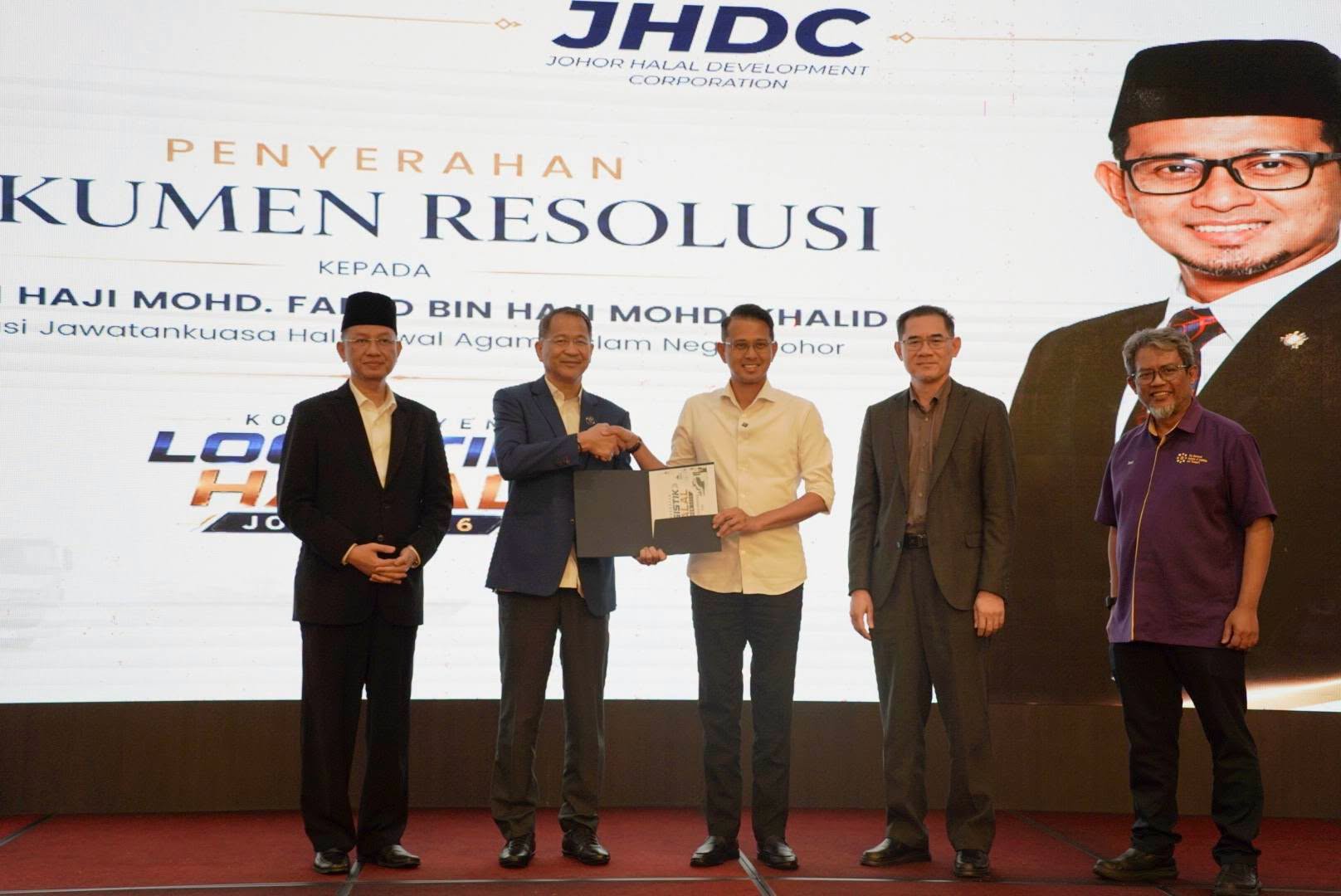
“The Johor state government’s responsibility is to ensure that from now on, there is a halal logistics system with methods and standards that are adopted by all manufacturers, importers, and exporters,” he told the media after officiating the closing of the Johor Halal Logistics Convention 2026 on 26th July 2026.
Mohd Fared also stated that all resolutions adopted at the convention would be refined before being presented to the state government as a foundation for developing new policies and planning the Johor Budget 2027.
The initiative is seen as consistent with Johor’s aspiration to become an international-class economic and halal hub, particularly with the development of the JS-SEZ, which is expected to boost trade, investment, and logistics activities between Malaysia and Singapore.
Halal logistics is an essential component of the halal certification ecosystem because it ensures that products are not contaminated or mixed with non-halal materials during the storage, transportation, and distribution stages.
Malaysia is currently recognised as a leader in the global halal industry through the halal certification standards operated by the Department of Malaysia Islamic Development (JAKIM), while the development of the halal logistics sector continues to be emphasised to strengthen the country’s competitiveness in the international halal market.