The Johor Port Berhad (JPB), in collaboration with the Johor Port Authority (LPJ), is expected to be the leader in the use of electric tugboats (e-tugboats) at the country’s ports, with at least five units operational by 2035.
Dr Rosnan Fathlal, chairman of the LPJ Board, reportedly said that the use of e-tugboats is timely, given the increase in diesel operating costs, which have risen more than fourfold compared to previous years.
It is said that the implementation of e-tugboats as early as the end of this year would result in significant savings, as the price of diesel prior to the (Iran-Israel-United States War) conflict was RM2.80 per litre, compared to around RM6.80 per litre now.
“Tugboats play an important role in port operations by shifting berthed vessels and towing them. JPB uses approximately one million litres of diesel per month, or 12 to 13 million litres per year.
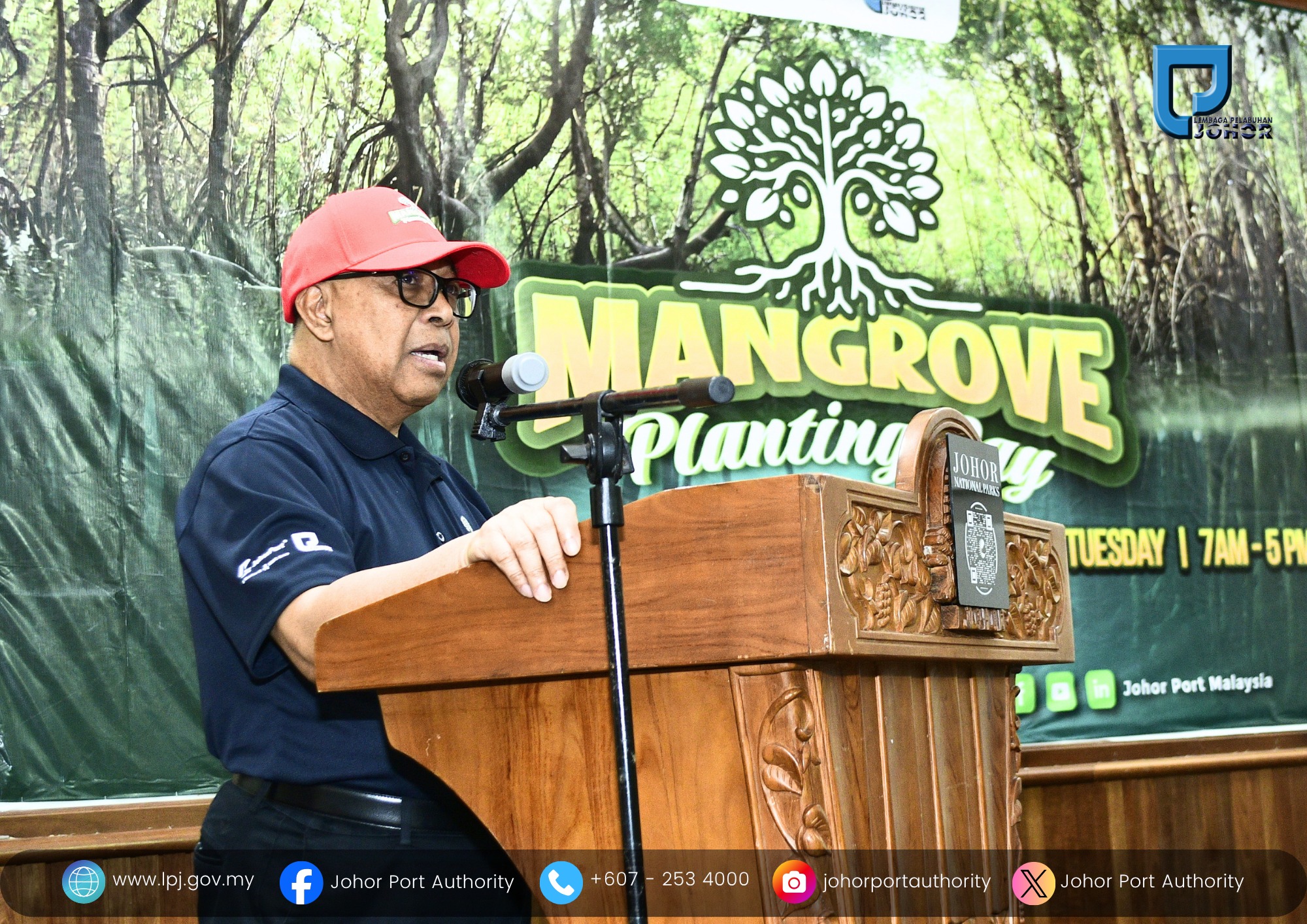
“Approximately 75% of that is just for tugboat operations. So, imagine how much could be saved if e-tugboats were used instead,” Bernama reported, following the 2026 Mangrove Tree Planting Day event at Tanjung Piai National Park.
Md Derick Basir, the CEO of Johor Port, and Muhammad Hanil Aminuddin, the manager of Johor Tanjung Piai National Park, were also in attendance.
According to Rosnan, the JPE will initially operate two e-tugboats, with five expected by 2035, and will conduct a study on the effectiveness of using this type of boat before replacing all tugboats in service.
“JPB currently operates 13 diesel tugboats and is significantly affected by rising fuel prices, as the amount (litres) used is more or less the same, but the price has now increased,” he said, adding that all ports nationwide continue to use diesel-powered tugboats.
Rosnan stated that in the first three months of this year, JPB handled 501,227 TEUs (twenty-foot equivalent units), compared to 509,790 TEUs in the same period last year, a reduction of 8,563 TEUS.
“During the same time period, vessel operations decreased from 2,103 to 1885 ships. This could be due to recent conflicts,” he said.
In the meantime, Rasnon stated that JPB and LPJ plan to plant approximately 100,000 mangrove trees in the state as part of their corporate social responsibility (CSR) initiatives.
He stated that the five-year target covers a 13.4-hectare area, with approximately 3.4 hectares already planted with mangrove trees in the third year of implementation.
“Tanjung Piai National Park, Universiti Teknologi Mara (UiTM) Fasir Gudang Campus, and Universiti Kuala Lumpur (UniKL-MITEC) collaborated with us on our CSR activities for World Earth Day. The programme’s goal is to restore erosion-affected coastal areas, contribute to marine biodiversity conservation, and raise public awareness about the value of mangrove forests as natural barriers,” he explained.
“Today alone, a total of 2,000 mangrove trees were planted as part of efforts to offset carbon and support their role as highly effective blue carbon absorbers,” he added.