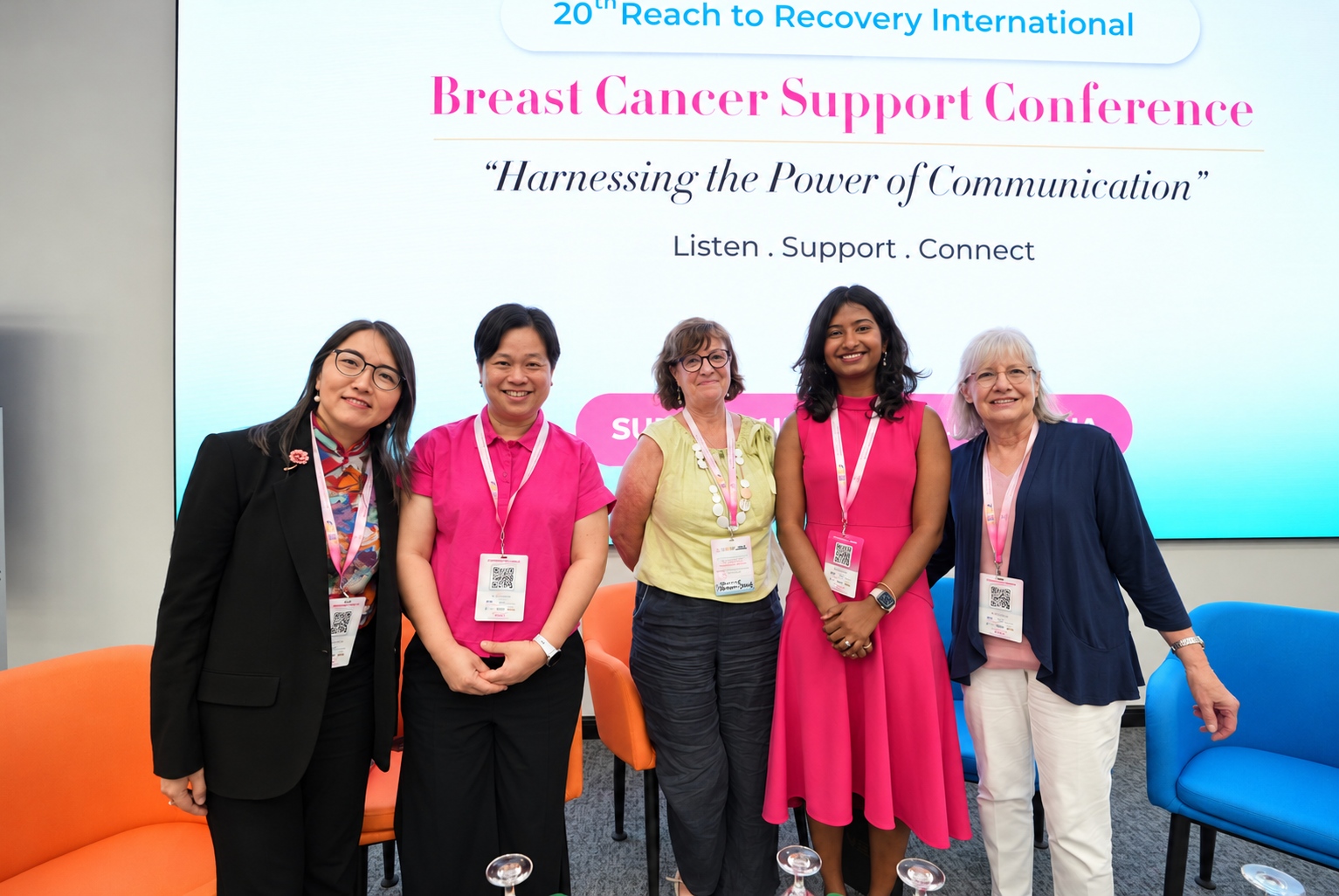
Leading clinicians and healthcare experts convened at the Reach to Recovery International Breast Cancer Support Conference 2026 to equip patient advocacy groups with a deeper understanding of recurrence risk in early breast cancer, including how it varies from patient to patient and what factors should inform long-term care decisions.
The Novartis-sponsored plenary session, “Understanding and Managing Recurrence Risk in Early Breast Cancer,” moved beyond general awareness to provide patient advocates with actionable knowledge: how genetic testing, tumor biology and individual risk factors shape each patient’s likelihood of recurrence, and what questions patients should ask their healthcare teams.
The session was grounded in insights from the Malaysia Breast Cancer Care Quality Index (BCCQI) framework-based local assessment and reflected a growing recognition that recurrence risk is not uniform, meaning patients and their advocates need to understand the specific factors that apply to them.
While breast cancer remains the most common cancer among women in Malaysia [1], many patients are unaware that the risk of the cancer returning can persist even after successful treatment, or that this risk differs significantly depending on individual clinical and genetic factors. The plenary aimed to close this knowledge gap by empowering the advocacy community to carry these conversations forward into their networks. Topics included how recurrence risk is individualised, the role of genetic testing after an early breast cancer diagnosis, how tumor biology and biomarkers influence treatment decisions and long-term monitoring, the factors that elevate or reduce risk, and practical guidance on supporting patients through the journey beyond initial treatment.
This followed Novartis’ recent media roundtable, which highlighted a persistent gap in public understanding about the risk of recurrence.
The session at Reach to Recovery marked a deliberate step forward, from raising general awareness to equipping advocates with the specific, individualised knowledge they need to support more informed conversations between patients and healthcare providers.
Prof. Dr Murallitharan Munisamy, Managing Director, National Cancer Society Malaysia, said, “While national frameworks such as the National Strategic Plan for Cancer Control Programme and the BCCQI exist to standardise therapy and drive improvements in the quality of breast cancer care, these do not capture recurrence. We simply don’t know how many women with early breast cancer go on to experience a recurrence, and while we know that many patients are fearful that the cancer may return, it is rarely named or spoken of. This is a real challenge as without data, we are unable to plan for it or fund it, and this is why we need to examine ongoing gaps in survivorship and continuity of care, particularly in how patients are supported beyond initial treatment. To get to the next level and make meaningful changes in patient outcomes, we need to look into how well the system supports equitable access and long-term care, along with how early and openly recurrence risk is addressed.”
Sanjeev Balachandran, Country President, Novartis Malaysia, Brunei and Asia Emerging Markets (AEM), said, “Early breast cancer is no longer just about survival. It is about what comes after – how patients live, how they are monitored, and how prepared they feel for what lies ahead. This means making recurrence risk part of the routine dialogue, not something that happens too late or not at all. For Novartis, improving outcomes in early breast cancer means normalising these discussions and supporting patients to actively engage in their long-term care.”
The plenary also reinforced the need for a more coordinated approach among stakeholders, clinicians, patient advocacy groups and the wider healthcare ecosystem to ensure patients are equipped with the right information, resources and support throughout their journey.
In line with this, Novartis is supporting efforts such as the National Breast Cancer Directory, a comprehensive cancer resource platform established by the National Cancer Society Malaysia in partnership with the Ministry of Health.
These efforts underscore an ongoing commitment to bringing together data-driven insights and real-world perspectives in support of patient advocacy, so that discussions on recurrence risk become routine, informed and patient-centered. By establishing a new baseline where survivorship is treated as an integral part of care, these efforts pave the way for recurrence risk to be acknowledged and managed more effectively.
To learn more about early breast cancer and the risk of recurrence, patients can access educational resources via the ICanCare app, available on Google Play and the App Store.
———————————————————————————————
[1] Galencentre.org: The inclusion of breast cancer is not optional. It is essential. https://galencentre.org/2025/07/16/breast-cancer-must-be-recognised-in-the-2025-united-nations-political-declaration-on-ncds-and-mental-health/


